
Imagine being friends
Or how I made a game about friendship for 7-8 year olds who often are solitary students in protestant religion class.

The Issue
As I’ve stated before, I teach Protestant-Evangelical religion in Belgium and I like story-telling games, including roleplaying games. Due to being a minority religion our groups in class are often small. With small I mean that there’s a chance of having only one student in a grade every year, and that chance is more than 50% in my experience teaching in the cities and villages around Brussels.
Now imagine having only one student in second grade. What would make this different from other grades? Well, second grade is entirely themed about friendship and working together. Insightful readers immediately see the problem here. Besides reading about it and talking about it, there’s not much else you can do. And even there, the teacher-student dynamic is not ideal for friendship and teamwork. So as a storytelling fan I had an idea.
The Concept
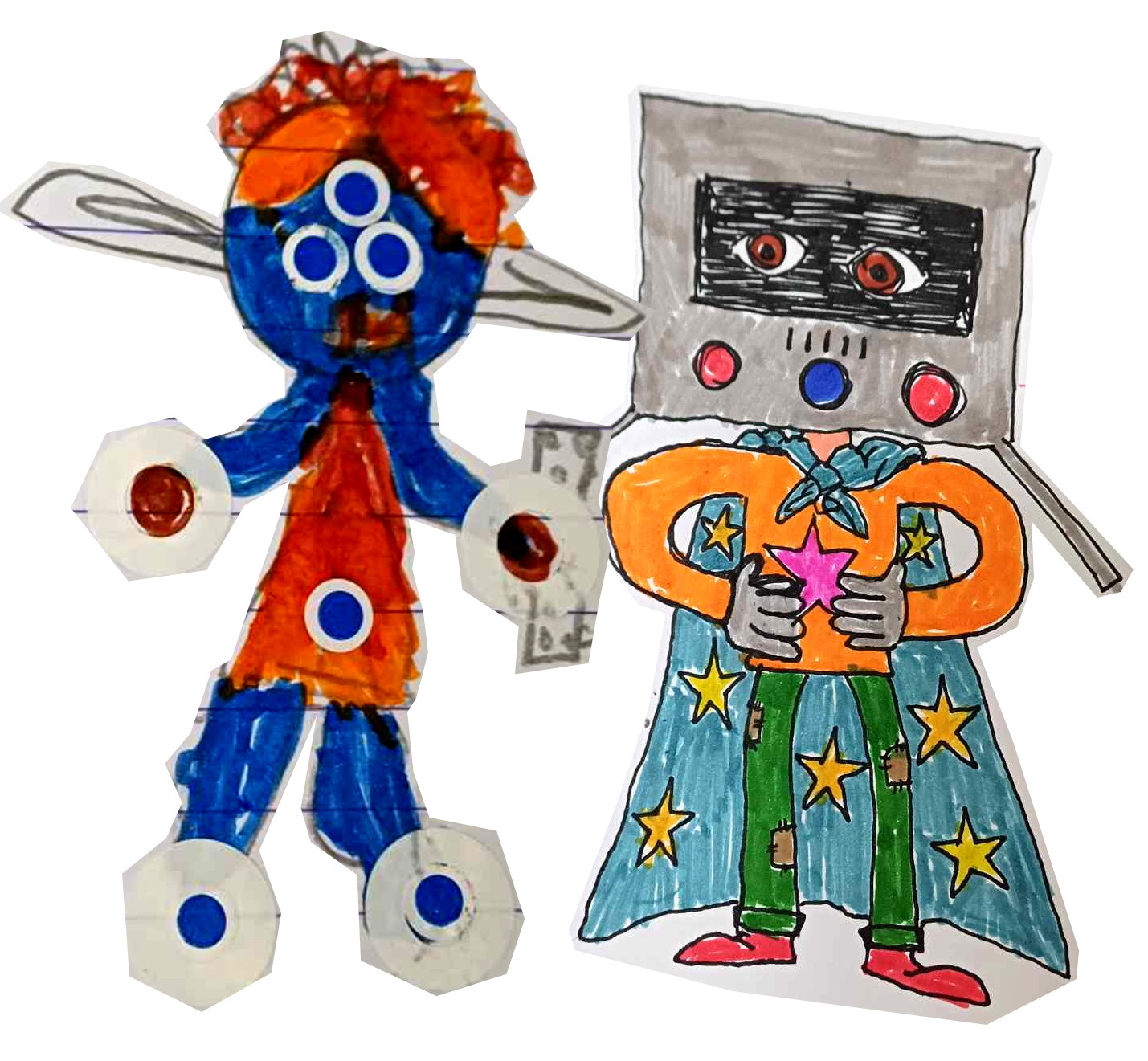
What if we play things out? What if we invent a bunch of friends that hang around in a clubhouse and have adventures? It’s kind of a simulation of being together with friends. But role-playing games take time. How do I fit in the lesson plan? Well, each lesson has been linked to a bible story in the lesson plan, so how about either before or after the story, we play through a “friendship adventure” based upon the same concept? We keep it short and simple so that it only takes up 30-40 minutes.
Thus the game was born. It has gone through many iterations over the years and come to a point where I’m comfortable writing it all down and sharing it in full. I hope to make a ruleset with explanations and “friendship adventure ideas” specifically for my fellow teachers this school year. It will be in Dutch for them first and then after I will make an English version for the greater hobby world, and not speciffically tied to the lesson plan, but with ideas about how to work around concepts that might be important for kids to develop empathy around.
The Gist
The main thing is that there should be at least two friends and a clubhouse. The student(s) each make one and the teacher makes at least one.
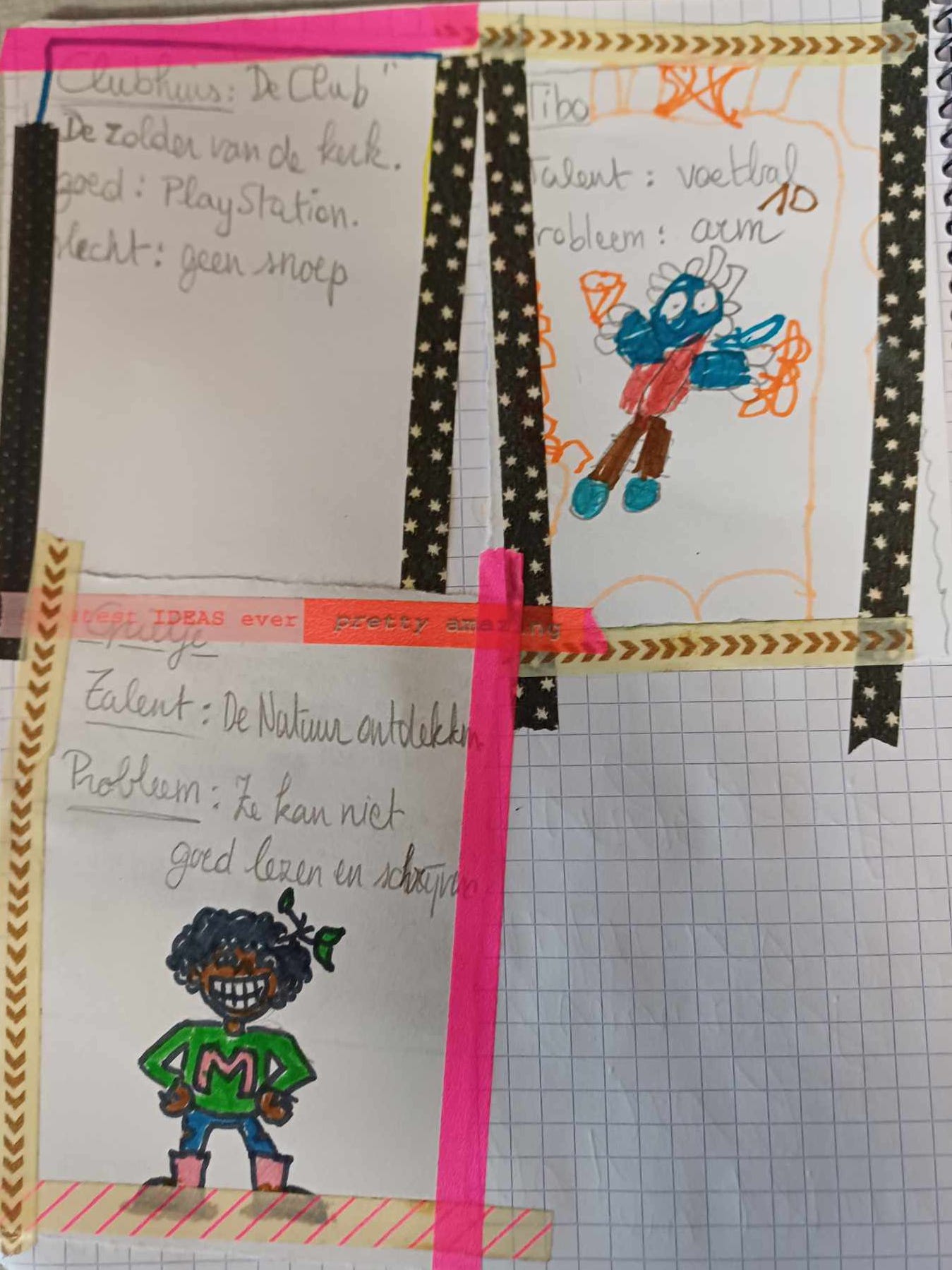
A friend has a name, a talent and a problem. Also we draw them and write the previous elements down.
The Clubhouse is an interesting location: A treehouse, The Attic, An Underground Bunker, The Moon … The clubhouse has a name and a description. Optionally there could be a problem with it, but it should remain a safe space. We draw this only if we have enough time.
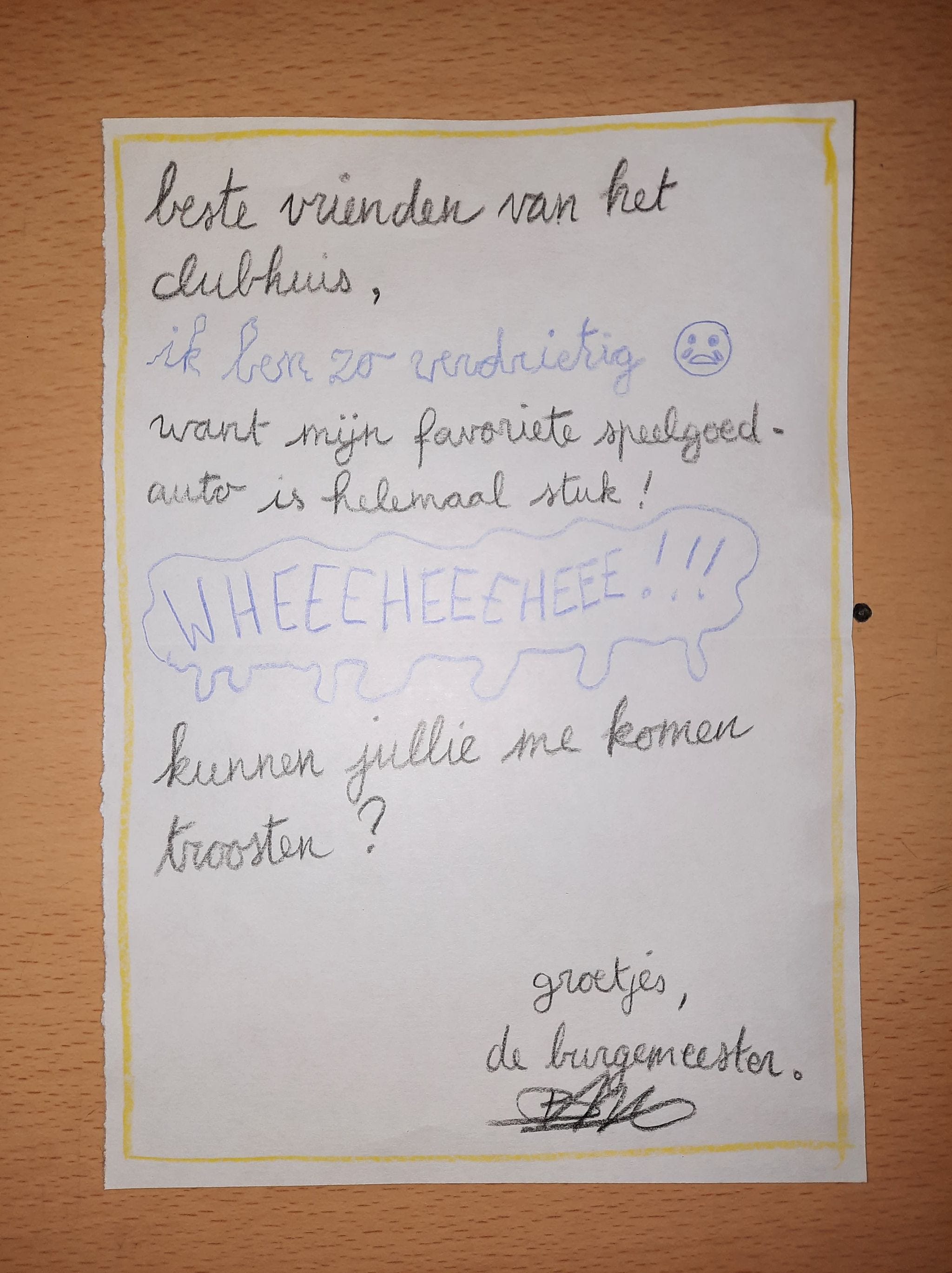
The friendship adventure describes a starting scene, which sometimes is a problem or issue that the friends face and sometimes it is not. A friend is sick, or we have a visitor, or …
The kids and the teacher then start playing the story out. The children with their own character, and the teacher playes everything else that happens: The other people they encounter, the places they go to … At some points we might be unclear wether someone can do something. This is when we roll dice to see what happens. The teacher sets a difficulty number to try and reach or exceed with the dice roll.
There have been many iterations on the system/rules, but generally speaking you as the character/friend can try something on your own, but it will be tricky or difficult. You only roll a limited number of dice. If your character has a talent for that specific action, they usually get some kind of bonus, like more dice to roll! If characters work together you can pool all dice, including the bonus dice for talented characters, and roll those. The difficulty number stays the same. This showcases both the talent of the character, letting them shine, and it shows how working together can make things that look difficult a lot easier.
If they work together by dividing tasks rather than all doing the same thing at once, the target number should be adjusted down for each task.
Examples
I would try and invent examples, but I’ve kept records of our old adventures on my old blog.
Coming soon
Soon these lessons will begin again, and there might be some classroom chronicles on this blog to follow. So keep your eyes peeled!